Towing is one of the few services people purchase without ever seeing a price list. By the time you need a tow truck, you’re usually stranded, stressed, and not in a position to comparison shop. That dynamic has produced an industry where pricing varies wildly and customers often feel like they’re being quoted on the spot rather than billed against a standard rate.
The reality is that towing pricing follows predictable patterns when you understand the structure. This guide breaks down what tow trucks actually cost in 2026, the factors that move the price up or down, what insurance typically covers, how to spot a price that’s out of line, and what to expect when you call for service.
Roger at Caliber Towing has been operating in the towing industry for over 11 years, serving Cheatham County and the greater Nashville area. The figures here are based on industry data from AAA, HomeGuide, Angi, and direct experience across thousands of jobs.
The Standard Pricing Model
Nearly every tow truck company in the United States prices using the same two-part structure: a hook-up fee plus a per-mile rate.
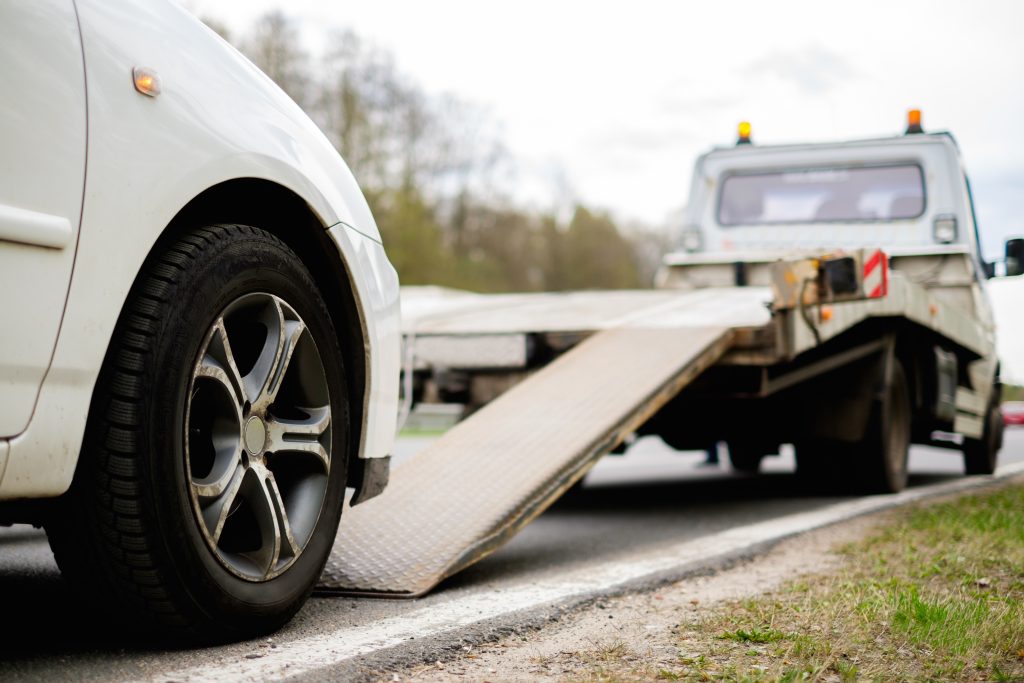
The hook-up fee covers the cost of dispatching a truck and operator to your location, assessing the vehicle, and loading it safely onto the truck. This is the baseline charge regardless of how far the tow ends up going.
The per-mile rate covers the actual transport distance from the pickup point to the drop-off destination.
Industry averages for 2026, based on data from AAA, HomeGuide, and Angi for light-duty towing in the United States:
- Hook-up fee: $75 to $125
- Per-mile rate: $4 to $7 per mile
- Minimum total for a short local tow: $95 to $175
- Average total for a 10-mile tow: $150 to $200
- Average total for a 25-mile tow: $200 to $325
These ranges are national averages. Rates in dense urban markets like Los Angeles, New York, or Miami can run 25-40% higher. Rates in rural markets are often slightly lower but with longer minimum distances built in. In the Middle Tennessee market, including Cheatham County and the Nashville area, pricing tends to fall in the middle of the national range.
The 8 Factors That Change Your Final Price
1. Distance
The single biggest variable. A 5-mile tow and a 50-mile tow share the same hook-up fee but the per-mile charges differ by an order of magnitude. Long-distance tows over 50 miles are typically quoted as a flat package rate rather than per-mile because the math gets awkward at scale.
2. Time of Day
Most tow companies charge an after-hours premium for calls between roughly 10 PM and 4 AM. The premium ranges from a flat $25-50 surcharge to a 1.5x multiplier on the hook-up fee. Sundays and holidays often carry the same premium.
If your situation is safe and you can wait until standard business hours, you’ll save meaningfully. If it’s not safe — disabled vehicle on a road, bad weather, or any safety concern — call immediately and pay the premium. The cost difference is small relative to the risk of waiting.
3. Vehicle Class
Towing rates are categorized by vehicle weight and complexity:
- Light-duty: standard cars, small SUVs, half-ton pickups, motorcycles. The base rates above apply.
- Medium-duty: heavier work trucks, large vans, dual-rear-wheel pickups, smaller box trucks, RVs under 26,000 pounds. Rates are typically 50-100% higher than light-duty.
- Heavy-duty: semi-trucks, buses, large RVs, commercial vehicles over 26,000 pounds. Rates can run 2-4x light-duty, and many companies don’t offer heavy-duty service at all.
Caliber Towing handles light-duty and medium-duty work. Heavy-duty requires specialized equipment and operator certifications most local tow companies don’t carry.
4. Flatbed vs. Wheel-Lift
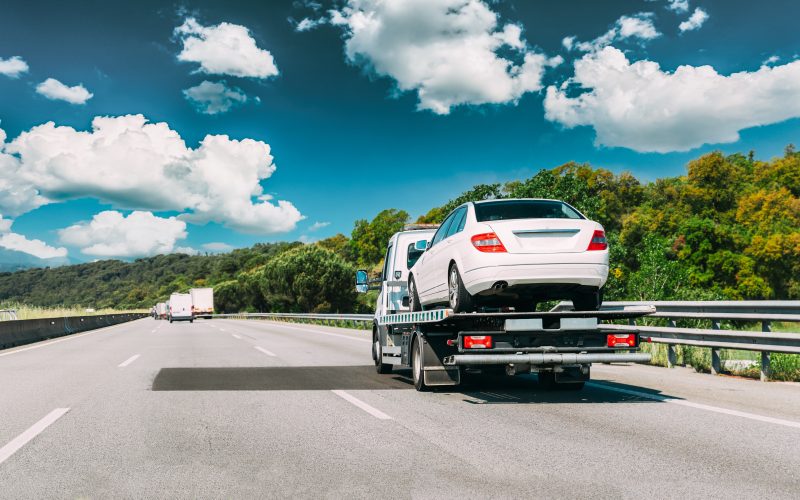
A flatbed tow typically costs $25-75 more than a wheel-lift tow for the same job. The premium reflects the higher equipment cost, longer loading time, and additional skill required. For some vehicles — all-wheel drive, electric, lowered, or damaged — flatbed is the only safe option regardless of price.
5. Recovery Complexity
A standard tow assumes the vehicle is parked or stopped in an accessible position. Recovery is anything beyond that:
- Winch-out (vehicle stuck in a ditch, mud, or off-road): typically adds $50-200
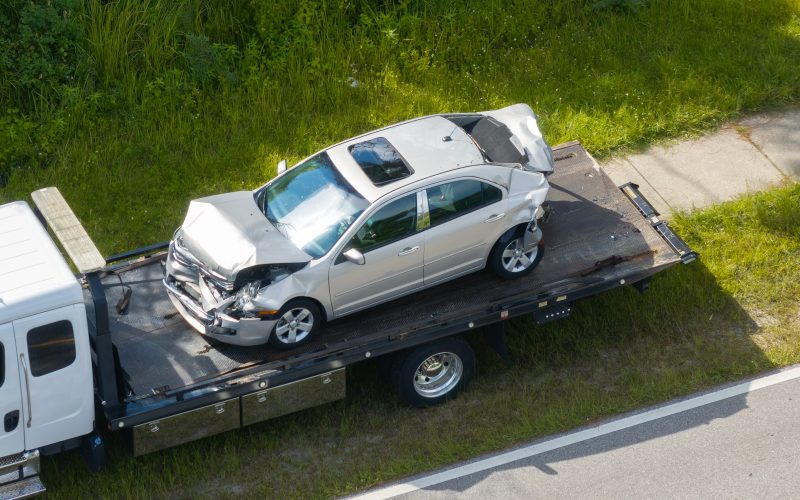
- Accident recovery (vehicle damaged, on its side, or in a complex position): typically adds $100-500+ depending on situation
- Off-road recovery: significantly higher, often requiring specialized equipment
These charges are usually quoted on-site after the operator can assess the situation. Photos sent ahead of time can speed up an accurate quote.
6. Storage Fees
If your vehicle has to be stored at the tow company’s lot — for example, after an accident when you can’t immediately move it — storage fees apply. Industry standards are $25-75 per day, with higher rates in major metropolitan areas. Storage starts the moment the vehicle arrives at the lot, so resolve drop-off destinations as quickly as possible.
7. Wait Time
If the operator arrives and you ask them to wait — for example, while you arrange a destination or wait for a family member — wait time charges typically begin after the first 15-30 minutes. Industry rates run $25-75 per additional 30 minutes.
8. Access Difficulty
Most jobs are straightforward access — a parking lot, driveway, or roadside. Some are not. Steep driveways, underground parking garages, vehicles wedged in tight spots, or rural locations far from main roads can add complexity that drives up the price.
What Insurance and Roadside Programs Cover
Many drivers pay for tows that would have been covered by an existing program. Before paying out of pocket, check the following:
Auto insurance roadside assistance
Most major auto insurers (Geico, Progressive, State Farm, Allstate, USAA, etc.) offer roadside assistance as a low-cost add-on, typically $5-15 per six-month policy period. Coverage usually includes:
- A tow of 10-25 miles per incident
- 3-5 incidents per policy year
- Lockout service, jump starts, tire changes, fuel delivery
- Direct billing to the insurer, so no out-of-pocket payment
AAA membership
AAA tiers determine coverage:
- AAA Classic: tow of up to 5 miles, 4 calls per year
- AAA Plus: tow of up to 100 miles per call
- AAA Premier: tow of up to 200 miles for one call per year, plus 100 miles for additional calls
AAA’s network of partnered tow operators handles the dispatch. Costs beyond your tier’s mileage cap are billed to you directly.
Manufacturer roadside programs
New vehicles from most major manufacturers include roadside assistance for the first 3-5 years of ownership:
- Toyota, Lexus, Honda, Acura: 3 years/36,000 miles
- Ford, Lincoln: 5 years/60,000 miles
- BMW: 4 years unlimited mileage
- Mercedes-Benz: unlimited duration for original owners
- Tesla: 4 years/50,000 miles
- Hyundai, Kia, Genesis: 5 years unlimited mileage
These programs typically cover towing to the nearest dealership or authorized service center, often at no cost during the coverage period.
After an accident
If the tow is necessary because of an accident, comprehensive or collision coverage on your auto policy generally covers the tow to a repair facility. You may pay out of pocket and submit for reimbursement, or the tow company may bill the insurance directly.
Why Some Tow Prices Don’t Add Up
Several pricing red flags should make any customer cautious:
Quotes far below market rates
Ads promising “$50 flat tow anywhere in town” are almost always one of three things: a teaser rate that only applies in narrow circumstances, a junk car operator who plans to take ownership of the vehicle as scrap, or a bait-and-switch where the actual bill comes in much higher. Legitimate tow operators in 2026 are not charging $50 for a real tow.
Aggressive arrival at accident scenes
Tow trucks that arrive at accident scenes without being called — sometimes within minutes of a collision — are operating as bandit towers. They monitor police scanners and rush to scenes to pressure stranded drivers into letting them load the vehicle. This is illegal in most states. You have the right to choose your tow company.
Unexplained add-on fees on the final invoice
Reputable companies itemize their charges. A bill with vague “administrative fees,” “environmental fees,” or “equipment surcharges” that weren’t disclosed up front is a sign of inflated pricing. Ask for a breakdown and dispute anything that wasn’t part of the original quote.
How to Get an Accurate Quote
To get a real price before the truck dispatches, give the tow company these details:
- Pickup location (address or GPS coordinates)
- Destination (specific address)
- Vehicle year, make, model, and trim
- What’s wrong with the vehicle
- Whether the vehicle can be put in neutral
- Whether the vehicle is on flat ground or stuck
- Time of day
With those details, any honest operator can quote a real total. Ask for the quote by text message so you have it in writing. If a company won’t quote you over the phone, call a different company.
Caliber Towing Pricing
Caliber Towing follows the standard hook-up plus per-mile pricing model used industry-wide. Our rates are competitive for Middle Tennessee, with:
- Standard hook-up fees for light-duty work
- Per-mile rates within our 50-75 mile service radius around Cheatham County
- After-hours premium for calls between 10 PM and 4 AM
- Flatbed rates for AWD, low-clearance, EV, and damaged vehicles
- Winch-out and recovery fees quoted per situation
We quote the total before dispatch and don’t change it on arrival. Call (615) 975-4187 or text us with the details above for a real number.
Frequently Asked Questions
How much does a standard tow cost in 2026?
A standard light-duty tow during business hours costs $95-200 for a short local tow (under 10 miles) in most United States markets. Longer tows are billed at $4-7 per mile beyond the hook-up fee. After-hours, flatbed, and recovery work add to the base price.
How much does it cost to tow a car 20 miles?
A 20-mile light-duty tow during regular hours typically costs $175-275 depending on the market. The hook-up fee plus 20 miles at the per-mile rate puts most jobs in that range. After-hours service adds a premium.
Is towing covered by insurance?
Only if you have the roadside assistance add-on or the tow follows a covered accident. Standard liability insurance does not include towing. Most insurers offer the add-on for $5-15 per six-month policy period.
Why are tow truck prices so high?
Tow trucks are expensive equipment ($80,000-$200,000+ depending on class), insurance for tow operators is high, fuel is significant on long calls, and the work involves real risk to the operator. Fair towing prices reflect those costs. They aren’t cheap, but they shouldn’t be a surprise either.
Can I negotiate a tow truck price?
Sometimes. If you call multiple companies and have flexibility on timing, you may be able to find a better rate. If you’re calling during an emergency, negotiation isn’t realistic. The best protection against overpaying is to get a written quote before the vehicle is loaded.
Do tow truck companies accept credit cards?
Most do, including all major companies. Cards, debit, contactless mobile payments, and cash are all common. Confirm payment options when you call to avoid surprises at the scene.
What’s the cheapest way to get a tow?
If you have AAA or insurance roadside coverage, use it — that’s almost always the lowest out-of-pocket cost. Otherwise, the shortest possible tow is the cheapest. Towing to the closest qualified destination costs less than a long-distance haul to a preferred shop.
Bottom Line
Tow truck pricing follows a predictable structure: hook-up fee plus per-mile rate, with premiums for after-hours, heavier vehicles, flatbeds, and recovery work. Knowing the typical ranges protects you from being overcharged and helps you make smart decisions when stranded.
For service in Cheatham County, the Nashville area, or anywhere in the surrounding 50-75 miles of Middle Tennessee, Caliber Towing provides transparent pricing and 24/7 dispatch. Call (615) 975-4187 for a real quote.