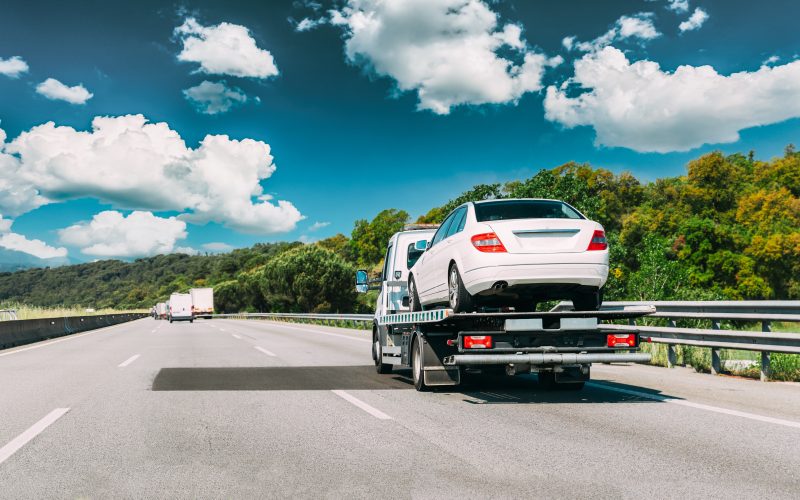
Tow truck drivers occupy an unusual position in American roadside safety. They respond to accident scenes, breakdowns, and disabled vehicles thousands of times a day across the country. In many cases, they arrive before police, firefighters, or paramedics. They work in the same high-risk zones, often in worse conditions, and the federal government tracks tow operator deaths in the same category as other roadside workers killed in the line of duty.
And yet most states do not legally classify tow truck drivers as first responders. The distinction has real consequences for how tow operators are protected by law, how they’re trained, and how the public interacts with them. It’s also one of the more interesting wrinkles in an industry that most drivers know very little about until they need it.
This article covers the legal status of tow truck drivers, what the job actually involves, how the industry is structured, the safety risks operators face, and a series of other questions about the towing industry that drivers commonly ask. The information here reflects 11 years of industry experience at Caliber Towing, serving Cheatham County and the greater Nashville area in Middle Tennessee.
The First Responder Question
The short answer: legally, no — tow truck drivers are not classified as first responders in most jurisdictions. Functionally, the answer is more complicated.
In the United States, the term “first responder” is most commonly used to describe police officers, firefighters, paramedics, and emergency medical technicians. These professionals have specific legal status that includes:
- Authority to direct traffic and secure scenes
- Workers’ compensation provisions specific to first responder duties
- Mental health and post-traumatic stress resources funded by federal programs
- Legal protections from civil liability under “good Samaritan” extensions
- Recognition in benefit programs for line-of-duty deaths
Tow truck drivers do not receive any of these protections in most states. But the work they do at accident scenes — clearing wreckage, recovering vehicles, securing the scene, helping injured drivers — is functionally part of emergency response.
Move Over Laws Recognize the Risk
All 50 states have “Move Over” laws requiring drivers to change lanes or slow down when approaching a stopped emergency vehicle. Most of these laws were originally written to protect police and emergency personnel. Today, all 50 states have expanded their Move Over laws to include tow trucks. This is the closest the legal system has come to formally recognizing tow operators as functional first responders.
Despite these laws, tow truck drivers are still struck and killed by passing vehicles with alarming frequency. The U.S. Bureau of Labor Statistics has consistently ranked tow truck operator as one of the most dangerous jobs in the country, with a fatality rate higher than police officers and firefighters in some recent years.
Limited Federal Recognition
In 2021, the U.S. Department of Transportation formally recognized the towing and recovery industry as part of the “Emergency Responder Safety Institute” responder community. This recognition acknowledges the role tow operators play in roadside incident response but stops short of granting first responder legal status.
Some states, including Tennessee, have introduced legislation in recent years to formally classify certain trained tow operators as first responders for specific purposes. As of 2026, this remains an evolving legal area.
What Tow Truck Drivers Actually Do
The public perception of towing is narrow: trucks pulling cars from one place to another. The actual scope of the work is much broader.
Emergency Roadside Response
The core of the job. Tow operators respond to breakdowns, accidents, lockouts, jump starts, fuel delivery, flat tires, and any other scenario that strands a vehicle. Response time is critical, and the work happens in every weather condition and at every hour.
Accident Scene Recovery
Tow operators clear vehicles from accident scenes, often in coordination with police and fire departments. This work requires specialized equipment to handle vehicles in unusual positions — on their sides, against barriers, in ditches, partially submerged. Operators are often the last responders to leave a scene because the road can’t fully reopen until vehicles are cleared.
Property Impound and Removal
Property owners — apartment complexes, businesses, parking lot managers — contract with tow companies to remove unauthorized or abandoned vehicles. This work is governed by state and local regulations that determine when and how vehicles can be towed from private property.
Long-Distance Transport
Vehicles sometimes need to be transported across states or hundreds of miles, often after a collision when the owner wants the vehicle returned home, or when a car is sold across state lines. This work uses flatbed trucks or multi-vehicle car carriers.
Equipment and Heavy Machinery Transport
Specialized tow operators move construction equipment, agricultural machinery, large industrial items, and other non-vehicle loads. This work requires specialized rigging and route planning.
Insurance and Fleet Service
Many tow companies have direct contracts with insurance companies, AAA, and corporate fleets. When a covered driver needs service, the call routes through these networks to a partnered local operator.
How the Industry Is Structured
The towing industry in the United States is heavily fragmented. According to industry estimates, there are roughly 50,000 towing companies operating in the U.S., the vast majority of which are independently owned small businesses.
Independent Local Operators
Most tow companies are independently owned and operate within a defined regional radius. These businesses typically have anywhere from one truck and one driver up to fleets of 10-20 vehicles. They build relationships with local mechanics, dealerships, insurance agents, and property managers in their service area.
Caliber Towing is a family-owned independent operator. We’ve served Cheatham County and the surrounding 50-75 miles of Middle Tennessee for over 11 years.
Roadside Assistance Networks
AAA, insurance companies, and manufacturer roadside programs maintain networks of contracted local operators. When you call AAA, a dispatch center routes the call to a local tow company that has a contract with AAA. This means most roadside assistance calls are still handled by independent local operators — the customer just doesn’t see the company until the truck arrives.
Large Regional and National Companies
A handful of larger companies operate across multiple states or maintain regional networks. These are the exception rather than the rule. The fragmented nature of the industry means local independent operators handle the vast majority of all towing in the United States.
The Risks of the Job
The dangers of tow truck operation are not well understood by the public. According to the Federal Highway Administration and the Bureau of Labor Statistics, tow truck drivers have one of the highest workplace fatality rates of any U.S. occupation.
Struck-by Incidents
The leading cause of death for tow truck operators is being struck by passing vehicles while working on the side of the road. Despite Move Over laws in every state, drivers regularly fail to slow down or change lanes when passing a stopped tow truck. The Move Over America campaign estimates that a tow truck driver is killed roughly every six days in the United States.
Weather Exposure
Tow operators work in every weather condition. Severe heat, severe cold, heavy rain, ice, snow, and fog all create operational hazards. Winter call volume spikes precisely when conditions are most dangerous.
Vehicle Hazards
Operators work around damaged vehicles with compromised structural integrity, leaking fluids, deployed airbags, and unstable positions. Hybrid and electric vehicles introduce electrical hazards that require specialized training to handle safely.
Customer Interactions
Many tow operators have stories about hostile customers, particularly during property impound work. The job sometimes involves de-escalation and personal safety considerations beyond the mechanical work.
Industry Facts Most Drivers Don’t Know
Tow Trucks Cost More Than Most Houses
A new heavy-duty wrecker can cost over $400,000. Even a basic light-duty tow truck starts around $80,000-100,000 and can run to $150,000 with specialty equipment. The high capital cost is one reason towing rates are what they are — a tow company has to operate equipment that costs more than most luxury cars.
The Industry Has a Skilled Labor Shortage
Becoming a competent tow operator takes years of training and experience. The industry has struggled to recruit and retain operators, particularly as the work has become more technically complex with the rise of electric vehicles, advanced driver assistance systems, and increasingly diverse vehicle types.
Most Tows Don’t Involve a “Tow”
A large portion of the daily work for most tow companies isn’t actually towing vehicles. Jump starts, fuel deliveries, lockouts, tire changes, and other roadside assistance calls often outnumber actual tows. Many tow operators describe their work as roadside assistance with towing as one of many services.
Bandit Towing Is a Real Problem
Predatory tow operators who arrive at accident scenes uninvited and pressure stranded drivers into accepting their service are a recognized problem in many areas. This practice is illegal in most states. The legitimate towing industry has worked with regulators and law enforcement to push back against bandit operators.
AAA Doesn’t Own Tow Trucks
AAA doesn’t operate its own fleet. Every AAA tow is dispatched to a contracted local independent tow operator. The same is true for most insurance and manufacturer roadside programs.
Frequently Asked Questions
Are tow truck drivers considered first responders?
Legally, no, in most United States jurisdictions. Tow truck drivers are not classified as first responders alongside police, fire, and EMS. Functionally, however, they respond to roadside emergencies thousands of times daily and are often the first responders to arrive at non-injury breakdowns. All 50 states include tow trucks in their Move Over laws, recognizing the safety risks of the work.
Do tow truck drivers go to accident scenes?
Yes. Tow operators respond to accident scenes to recover and remove damaged vehicles, often working alongside police, fire, and EMS. This work includes vehicles in unusual positions, fluid cleanup, and clearing the scene so the road can reopen.
How dangerous is being a tow truck driver?
Statistically, very. The U.S. Bureau of Labor Statistics has ranked tow truck operator as one of the most dangerous jobs in the country, with a fatality rate often exceeding police officers and firefighters. The leading cause of operator death is being struck by passing vehicles while working roadside.
Do tow truck drivers have authority to direct traffic?
Generally, no. Tow operators don’t have legal authority to direct traffic or issue citations. They rely on positioning their trucks to create safe work zones, on Move Over laws being followed by drivers, and on police presence when conditions require active traffic management.
Can tow truck drivers refuse a tow?
Yes. Tow operators can decline service for safety reasons, equipment limitations, scheduling conflicts, or any other legitimate reason. They cannot refuse service based on discriminatory factors prohibited by law.
How long does it take to become a tow truck driver?
The path varies by state. Most states require a commercial driver’s license for medium and heavy-duty operators, and many require specific tow operator certifications. Becoming a competent independent operator typically takes 2-5 years of working under experienced operators before going out on one’s own.
Bottom Line
Tow truck drivers occupy an unusual professional space — performing emergency response work without formal first responder status, operating expensive specialized equipment in dangerous conditions, and serving as one of the most-used and least-understood services in American transportation. The industry is overwhelmingly composed of small independent businesses serving local communities.
Caliber Towing is one of those independent businesses, family-owned and operating across Cheatham County, the greater Nashville area, and Middle Tennessee for over 11 years. If you ever need service — emergency, scheduled, light-duty, or flatbed — call (615) 975-4187. 24 hours a day, real quotes before dispatch, and the kind of work that comes from doing this every day for over a decade.