When a tow truck arrives to load a disabled vehicle, the operator has two primary methods available: a wheel-lift tow or a flatbed tow. To most drivers, these look like cosmetic choices — different equipment, same result. They’re not. Choosing the wrong tow method for certain vehicles can cause thousands of dollars of damage to the drivetrain, transmission, suspension, or body. And the damage often doesn’t manifest for days or weeks, meaning customers don’t connect the problem to the tow until it’s too late to dispute the charge.
This is one of the most consequential decisions made during a roadside breakdown, and it’s a decision most drivers don’t know they’re supposed to be part of. This guide explains how each method works, which vehicles require which, and how to make sure your car is towed correctly.
The information here reflects industry best practices, manufacturer guidelines, and Roger’s 11 years of operating Caliber Towing across Cheatham County and the greater Nashville area in Middle Tennessee.
How Wheel-Lift Towing Works
A wheel-lift tow truck uses a hydraulic L-arm extending from the rear of the truck. The operator slides the arm under the vehicle, secures it under either the front or rear wheels (depending on which is the drive axle), and lifts those wheels off the ground. The opposite axle’s wheels remain on the pavement and roll behind the truck during transport.
Wheel-lift offers several advantages:
- Fast setup time, typically under 5 minutes
- Lower equipment cost, which translates to lower service prices
- Excellent maneuverability — wheel-lift trucks can access tight parking spaces, steep driveways, and other locations a flatbed can’t reach
- Adequate for most standard front-wheel-drive and rear-wheel-drive cars on short-to-medium distance tows
The fundamental limitation: two of the vehicle’s wheels are still on the road and still rotating during the entire tow. For some vehicles, that rotation causes serious problems.
How Flatbed Towing Works
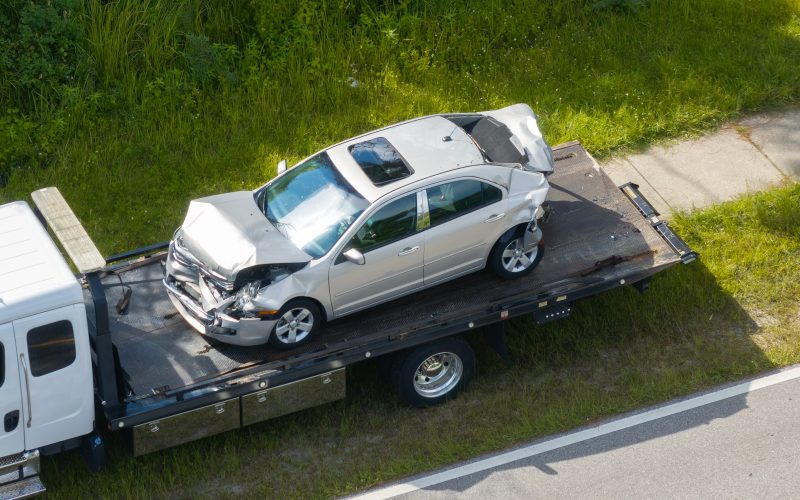
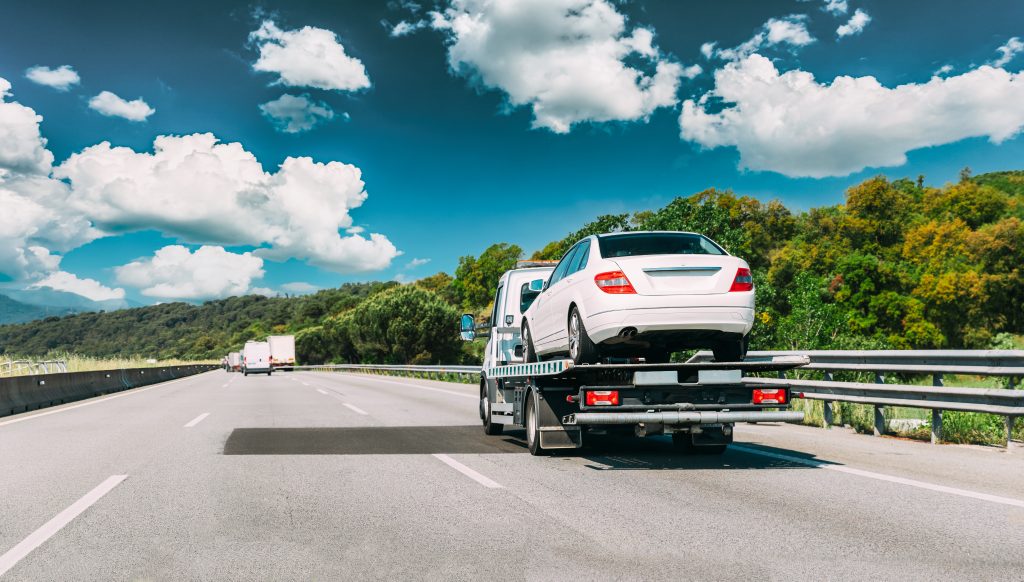
A flatbed tow truck has a hydraulic deck that tilts down to ground level. The operator attaches a winch cable to the front of the vehicle and pulls it up onto the deck. Once positioned, the deck levels out and the vehicle is secured with straps or chains. All four wheels are off the ground for the entire tow.
Flatbed offers several advantages:
- Safe for any vehicle, regardless of drivetrain or condition
- Required for any vehicle that cannot tolerate having wheels rotating during transport
- Better for long-distance tows because no drivetrain wear occurs
- Necessary for damaged or wrecked vehicles that can’t roll properly
- Necessary for vehicles with low clearance that would scrape on a wheel-lift
The trade-offs are higher equipment cost (which translates to higher service prices, typically $25-75 more than wheel-lift) and longer loading time (10-15 minutes versus under 5).
When in doubt, flatbed is always the safer choice. The cost difference is small compared to the damage that can occur from towing the wrong way.
Vehicles That MUST Be Towed on a Flatbed
If your vehicle falls into any of the categories below, do not allow a wheel-lift tow. Ask specifically for a flatbed. If a tow operator tells you a wheel-lift is fine for any of these vehicles, find a different operator.
All-Wheel Drive Vehicles
This is the largest category of vehicles requiring flatbed service. All-wheel drive (AWD) vehicles distribute engine power to all four wheels through a center differential, transfer case, or viscous coupling. When an AWD vehicle is towed with two wheels on the ground, the rolling wheels spin the drivetrain components — but without engine lubrication or oil pressure on those components.
The result is rapid wear or outright damage to the AWD system. Common failures include:
- Damaged transfer case ($1,500-3,500 to repair)
- Burned out viscous coupling ($800-2,000)
- Damaged center differential ($1,500-4,000)
- In severe cases, complete drivetrain failure
Common AWD vehicles drivers don’t always realize are AWD:
- Most Subaru models (Outback, Forester, Impreza, Crosstrek, Ascent, WRX)
- Many Toyota crossovers and SUVs in AWD trim (RAV4, Highlander, Sienna, Venza)
- Honda CR-V, Pilot, Passport, Ridgeline in AWD trims
- Acura RDX, MDX, TLX in SH-AWD trim
- Audi quattro models (most Audis are quattro)
- BMW xDrive models
- Mercedes-Benz 4MATIC models
- Volvo AWD models
- Mazda CX-5, CX-9, CX-90 in AWD
- Volkswagen 4Motion models
If you’re not certain whether your vehicle is AWD, check the door jamb sticker, look for an AWD/quattro/4Motion/xDrive badge on the rear of the vehicle, or consult your owner’s manual.
Electric Vehicles
Every major electric vehicle manufacturer specifies flatbed-only towing in their owner’s manual. The reason is the same as AWD — electric motors are directly connected to the wheels through reduction gears, and rotating those wheels with the motors offline can damage the motor windings, regenerative braking system, or battery management system.
Vehicles requiring flatbed-only towing:
- Tesla Model S, 3, X, Y, Cybertruck
- Rivian R1T, R1S
- Ford Mustang Mach-E, F-150 Lightning
- Chevrolet Bolt, Equinox EV, Blazer EV
- Hyundai Ioniq 5, Ioniq 6, Kona EV
- Kia EV6, EV9, Niro EV
- Lucid Air
- Polestar 2, 3
- Volkswagen ID.4
- BMW i4, i5, iX
- Mercedes-Benz EQS, EQE, EQB
- Audi e-tron models
- Most plug-in hybrids in pure-electric mode
Standard hybrids (Toyota Prius, Honda Insight, etc.) vary by model. Check the owner’s manual or ask the tow operator to confirm before any tow.
4-Wheel Drive Trucks and SUVs
4WD is different from AWD in that most 4WD systems can be shifted into 2WD-rear-drive mode. If a 4WD truck can be set to 2WD, a wheel-lift may be safe with the front wheels off the ground (towing on the rear). However, full-time 4WD systems (some Jeep Grand Cherokees, certain Land Rovers, modern Toyota 4Runners in some trims) cannot be disengaged and must be flatbedded.
If you can’t be certain whether your 4WD can be safely wheel-lifted, choose the flatbed.
Lowered, Sport, and Low-Clearance Vehicles
Sports cars, lowered vehicles, and cars with aerodynamic body kits have ground clearance issues that make wheel-lift towing destructive to the front of the vehicle. The angle the car has to sit at on a wheel-lift causes front spoilers, splitters, and undertrays to scrape on every transition, driveway, or bump.
Vehicles in this category include:
- Modern Corvette, particularly C7 and C8 generations
- BMW M-series and M Performance models
- Mercedes-AMG models
- Modern Mustang GT, Shelby, and Dark Horse trims
- Dodge Challenger and Charger SRT models
- Honda Civic Type R
- Volkswagen Golf R, Audi RS models
- Lowered or aftermarket-suspension vehicles of any make
- Most exotic and supercars
Classic and Collector Cars
Vehicles built before approximately 1985 often have suspension and drivetrain components that weren’t designed for modern towing. Leaf-spring rear ends, drum brakes, aluminum body panels on some models, and aging differentials all introduce risks on a wheel-lift. Classic and collector vehicles should always be flatbedded.
Damaged or Wrecked Vehicles
After any collision, the vehicle’s suspension geometry, frame alignment, or wheel hubs may be compromised in ways that aren’t visible. A wheel-lift tow can cause damaged suspension to collapse during transport, misaligned wheels to drag, or hidden frame damage to worsen. Any vehicle involved in a collision should be flatbedded regardless of other characteristics.
Vehicles That Can Safely Use a Wheel-Lift
To be fair to wheel-lift towing, it remains the appropriate method for the majority of routine tows. Vehicles that can safely use a wheel-lift include:
- Standard front-wheel-drive cars (Camry, Corolla, Civic, Accord, Sentra, Altima, etc.) in non-sport trims
- Standard rear-wheel-drive pickups in 2WD trims (F-150 2WD, Silverado 2WD, Ram 1500 2WD, Tundra 2WD)
- Standard rear-wheel-drive sedans without performance packages (older Crown Victoria, Town Car, base-trim Charger, etc.)
- Most older vehicles without low front ends or AWD
- Routine short-distance tows of vehicles with all wheels intact and undamaged
If you drive a mainstream sedan, hatchback, or 2WD truck and need a short-to-medium-distance tow, a wheel-lift is the appropriate, cost-effective choice.
Long-Distance Tows: Default to Flatbed
Even for vehicles that wheel-lift safely on short trips, longer tows create cumulative wear on the rolling wheels and the wheel bearings. Industry guidance generally recommends flatbed transport for any tow over 50 miles, regardless of vehicle type. The wheel bearings, suspension components, and drivetrain elements that idle along on a wheel-lift weren’t designed for hours of passive rotation without lubrication.
For tows from Middle Tennessee to major destinations like Memphis, Knoxville, or out-of-state, request a flatbed.
How to Verify the Right Method Before Loading
Before the operator hooks up your vehicle, take 30 seconds to confirm the right approach:
- Tell the operator the year, make, model, and trim of your vehicle
- Mention if it’s AWD, 4WD, electric, hybrid, lowered, modified, or classic
- Mention if the vehicle has been in an accident or has any damage
- Ask whether they recommend flatbed or wheel-lift, and why
- If you’ve been told by the dealer, manufacturer, or owner’s manual to use flatbed, say so
Any reputable tow operator will appreciate the conversation. Most damage claims in the towing industry come from miscommunication about vehicle type, and a 30-second verification protects everyone.
Frequently Asked Questions
What’s the difference between flatbed and wheel-lift towing?
Wheel-lift towing uses a hydraulic arm to lift two of the vehicle’s wheels off the ground, with the other two rolling on the pavement. Flatbed towing puts the entire vehicle onto a flat deck, with all four wheels off the ground. Flatbed is safer for AWD, electric, lowered, and damaged vehicles. Wheel-lift is faster and cheaper for standard cars.
Can an AWD car be wheel-lifted?
No. AWD vehicles must be flatbedded. Wheel-lift towing causes the drive wheels to spin the drivetrain without engine lubrication, which can damage the transfer case, viscous coupling, or center differential. Repairs typically run $1,500-4,000.
Do electric vehicles need a flatbed?
Yes. Every major EV manufacturer (Tesla, Rivian, Ford, Chevrolet, Hyundai, Kia, BMW, Mercedes, Audi, etc.) specifies flatbed-only towing in their owner’s manual. Wheel-lift towing can damage the electric motor, regenerative braking system, or battery management system.
Is flatbed towing more expensive than wheel-lift?
Usually, but not dramatically. Expect $25-75 more for a flatbed tow of the same distance. For any vehicle that requires flatbed, the price difference is much less than the potential damage from a wheel-lift.
How do I know if my car is AWD?
Check the door jamb sticker for the drivetrain code, look for an AWD/quattro/4Motion/xDrive/SH-AWD badge on the rear of the vehicle, or check the owner’s manual. When in doubt, give the year, make, model, and trim to the tow company and they can confirm.
What if the tow operator wants to wheel-lift a vehicle that needs flatbed?
Don’t allow it. Ask specifically for a flatbed. If they don’t have one available, call a different company. A wheel-lift on an AWD or EV can cause damage far exceeding the cost difference between the two services.
Can a wrecked car be wheel-lifted?
Generally, no. Wrecked vehicles often have damaged suspension, alignment, or wheel hubs that aren’t visible but can cause problems during a wheel-lift tow. Any vehicle involved in a collision should be flatbedded.
Bottom Line
The right tow method matters more than most drivers realize. For all-wheel-drive vehicles, electric vehicles, lowered or sport cars, classic vehicles, damaged vehicles, and any tow over 50 miles, the answer is always flatbed. For standard front-wheel-drive or rear-wheel-drive vehicles on short tows, wheel-lift is fine and saves money.
When in doubt, ask. When still in doubt, choose flatbed.
Caliber Towing operates both flatbed and wheel-lift equipment across Cheatham County, the greater Nashville area, and Middle Tennessee. We confirm the right method before dispatch. Call (615) 975-4187 with your vehicle’s year, make, and model for a real recommendation.